
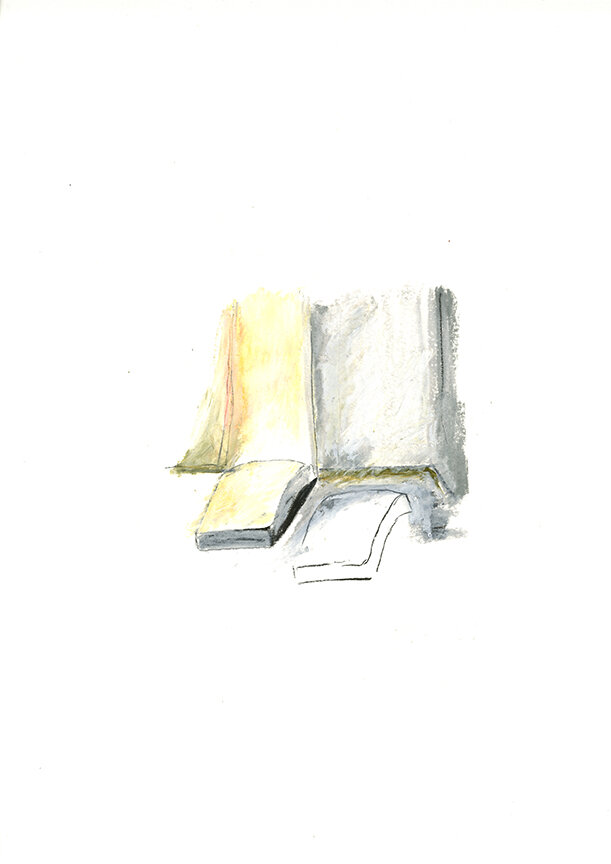
Mixed media on Stonehenge paper, 15 x 22 inches
Drawings #13–44 emerged from an ongoing investigation into memory, domestic architecture and the ways our bodies retain experiences that our minds cannot fully recall. The forms reference half-remembered physical structures from childhood—fragments of rooms, furniture, architectural details and objects that remain present in memory without a complete understanding of their histories.
Floating against otherwise empty backgrounds, these forms occupy an uncertain space between recognition and abstraction. Their sometimes awkward proportions, unexpected colours and incomplete structures reflect the fragmented nature of remembering, where physical details can remain vivid even as the events surrounding them become inaccessible.
Made with a combination of pastels, graphite, charcoal, watercolour and other drawing materials, the works form part of a larger inquiry into childhood trauma, dissociation and the relationship between physical environments and emotional lives. Drawing becomes a means of giving form to what is remembered, what has been forgotten and what remains unresolved.
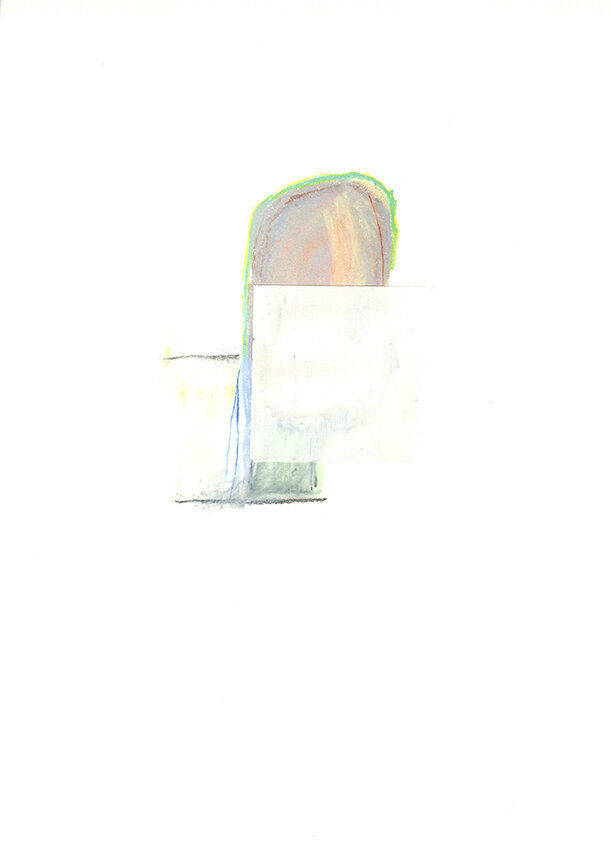
Mixed media on Stonehenge paper, 15 x 22 inches
Drawings #13–44 emerged from an ongoing investigation into memory, domestic architecture and the ways our bodies retain experiences that our minds cannot fully recall. The forms reference half-remembered physical structures from childhood—fragments of rooms, furniture, architectural details and objects that remain present in memory without a complete understanding of their histories.
Floating against otherwise empty backgrounds, these forms occupy an uncertain space between recognition and abstraction. Their sometimes awkward proportions, unexpected colours and incomplete structures reflect the fragmented nature of remembering, where physical details can remain vivid even as the events surrounding them become inaccessible.
Made with a combination of pastels, graphite, charcoal, watercolour and other drawing materials, the works form part of a larger inquiry into childhood trauma, dissociation and the relationship between physical environments and emotional lives. Drawing becomes a means of giving form to what is remembered, what has been forgotten and what remains unresolved.
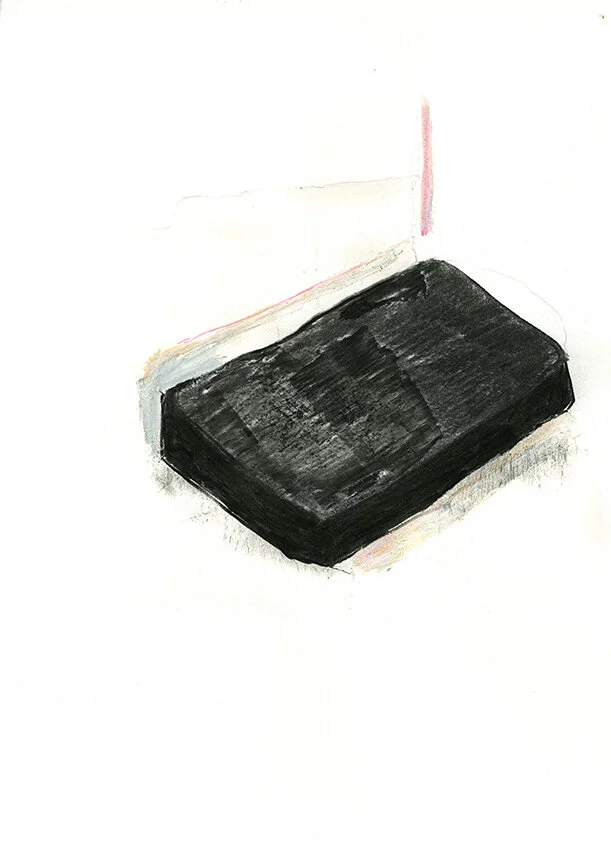
Mixed media on Stonehenge paper, 15 x 22 inches
Drawings #13–44 emerged from an ongoing investigation into memory, domestic architecture and the ways our bodies retain experiences that our minds cannot fully recall. The forms reference half-remembered physical structures from childhood—fragments of rooms, furniture, architectural details and objects that remain present in memory without a complete understanding of their histories.
Floating against otherwise empty backgrounds, these forms occupy an uncertain space between recognition and abstraction. Their sometimes awkward proportions, unexpected colours and incomplete structures reflect the fragmented nature of remembering, where physical details can remain vivid even as the events surrounding them become inaccessible.
Made with a combination of pastels, graphite, charcoal, watercolour and other drawing materials, the works form part of a larger inquiry into childhood trauma, dissociation and the relationship between physical environments and emotional lives. Drawing becomes a means of giving form to what is remembered, what has been forgotten and what remains unresolved.
Mixed media on Stonehenge paper, 15 x 22 inches
Drawings #13–44 emerged from an ongoing investigation into memory, domestic architecture and the ways our bodies retain experiences that our minds cannot fully recall. The forms reference half-remembered physical structures from childhood—fragments of rooms, furniture, architectural details and objects that remain present in memory without a complete understanding of their histories.
Floating against otherwise empty backgrounds, these forms occupy an uncertain space between recognition and abstraction. Their sometimes awkward proportions, unexpected colours and incomplete structures reflect the fragmented nature of remembering, where physical details can remain vivid even as the events surrounding them become inaccessible.
Made with a combination of pastels, graphite, charcoal, watercolour and other drawing materials, the works form part of a larger inquiry into childhood trauma, dissociation and the relationship between physical environments and emotional lives. Drawing becomes a means of giving form to what is remembered, what has been forgotten and what remains unresolved.
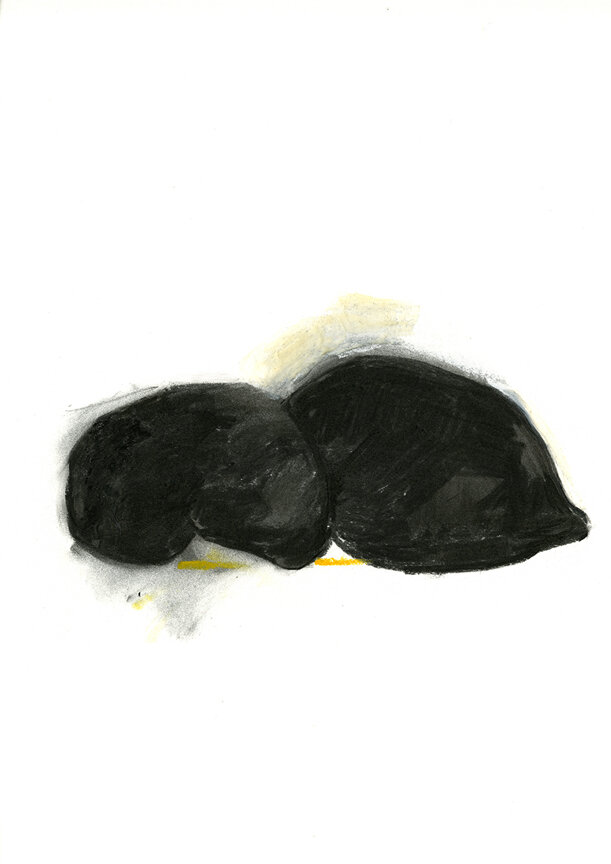
Mixed media on Stonehenge paper, 15 x 22 inches
Drawings #13–44 emerged from an ongoing investigation into memory, domestic architecture and the ways our bodies retain experiences that our minds cannot fully recall. The forms reference half-remembered physical structures from childhood—fragments of rooms, furniture, architectural details and objects that remain present in memory without a complete understanding of their histories.
Floating against otherwise empty backgrounds, these forms occupy an uncertain space between recognition and abstraction. Their sometimes awkward proportions, unexpected colours and incomplete structures reflect the fragmented nature of remembering, where physical details can remain vivid even as the events surrounding them become inaccessible.
Made with a combination of pastels, graphite, charcoal, watercolour and other drawing materials, the works form part of a larger inquiry into childhood trauma, dissociation and the relationship between physical environments and emotional lives. Drawing becomes a means of giving form to what is remembered, what has been forgotten and what remains unresolved.
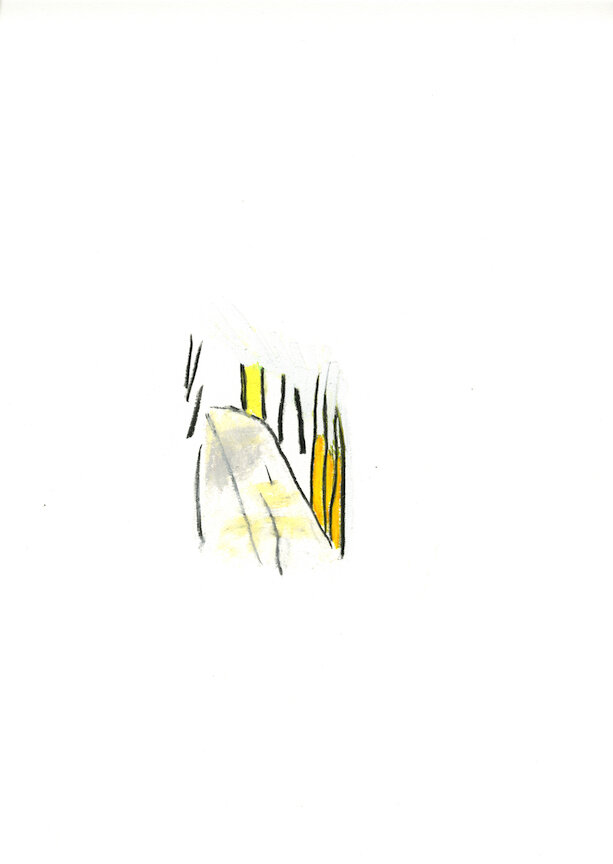
Mixed media on Stonehenge paper, 15 x 22 inches
Drawings #13–44 emerged from an ongoing investigation into memory, domestic architecture and the ways our bodies retain experiences that our minds cannot fully recall. The forms reference half-remembered physical structures from childhood—fragments of rooms, furniture, architectural details and objects that remain present in memory without a complete understanding of their histories.
Floating against otherwise empty backgrounds, these forms occupy an uncertain space between recognition and abstraction. Their sometimes awkward proportions, unexpected colours and incomplete structures reflect the fragmented nature of remembering, where physical details can remain vivid even as the events surrounding them become inaccessible.
Made with a combination of pastels, graphite, charcoal, watercolour and other drawing materials, the works form part of a larger inquiry into childhood trauma, dissociation and the relationship between physical environments and emotional lives. Drawing becomes a means of giving form to what is remembered, what has been forgotten and what remains unresolved.
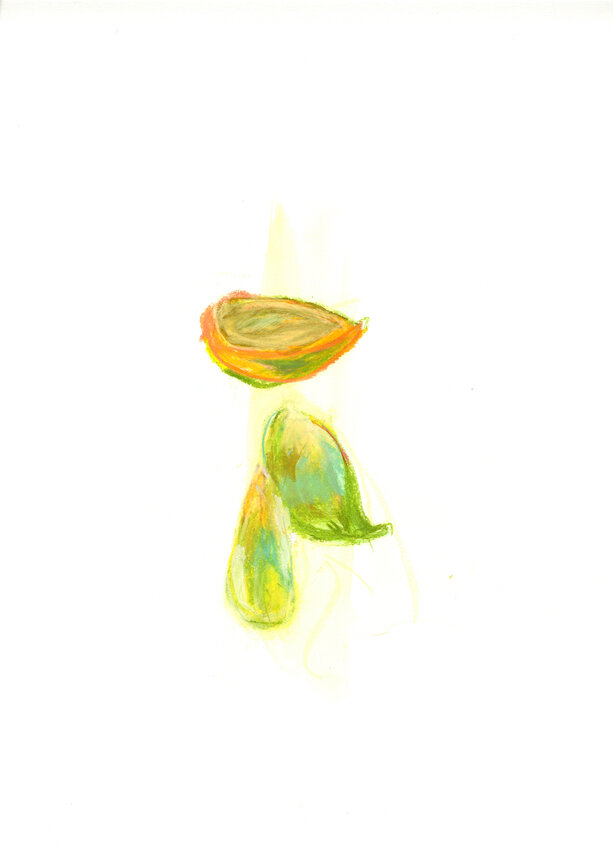
Mixed media on Stonehenge paper, 15 x 22 inches
Drawings #13–44 emerged from an ongoing investigation into memory, domestic architecture and the ways our bodies retain experiences that our minds cannot fully recall. The forms reference half-remembered physical structures from childhood—fragments of rooms, furniture, architectural details and objects that remain present in memory without a complete understanding of their histories.
Floating against otherwise empty backgrounds, these forms occupy an uncertain space between recognition and abstraction. Their sometimes awkward proportions, unexpected colours and incomplete structures reflect the fragmented nature of remembering, where physical details can remain vivid even as the events surrounding them become inaccessible.
Made with a combination of pastels, graphite, charcoal, watercolour and other drawing materials, the works form part of a larger inquiry into childhood trauma, dissociation and the relationship between physical environments and emotional lives. Drawing becomes a means of giving form to what is remembered, what has been forgotten and what remains unresolved.
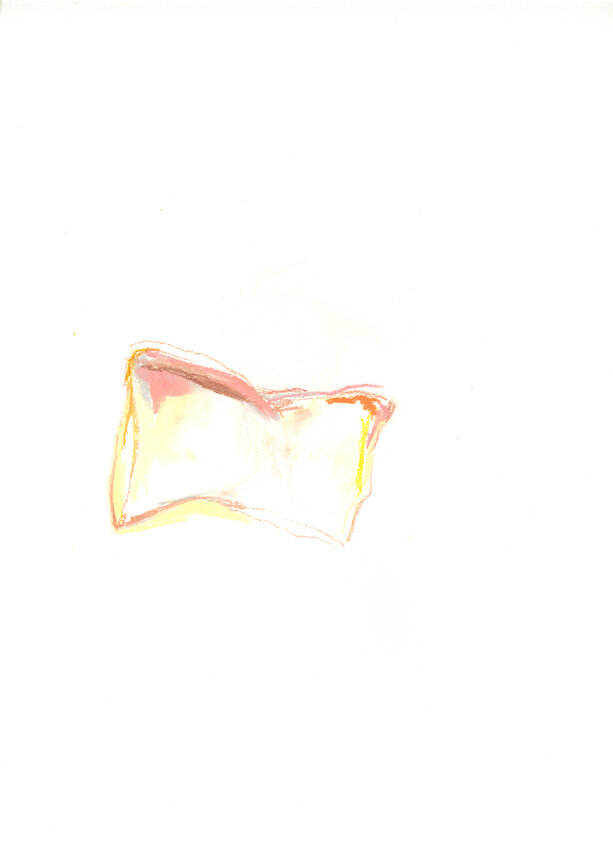
Mixed media on Stonehenge paper, 15 x 22 inches
Drawings #13–44 emerged from an ongoing investigation into memory, domestic architecture and the ways our bodies retain experiences that our minds cannot fully recall. The forms reference half-remembered physical structures from childhood—fragments of rooms, furniture, architectural details and objects that remain present in memory without a complete understanding of their histories.
Floating against otherwise empty backgrounds, these forms occupy an uncertain space between recognition and abstraction. Their sometimes awkward proportions, unexpected colours and incomplete structures reflect the fragmented nature of remembering, where physical details can remain vivid even as the events surrounding them become inaccessible.
Made with a combination of pastels, graphite, charcoal, watercolour and other drawing materials, the works form part of a larger inquiry into childhood trauma, dissociation and the relationship between physical environments and emotional lives. Drawing becomes a means of giving form to what is remembered, what has been forgotten and what remains unresolved.
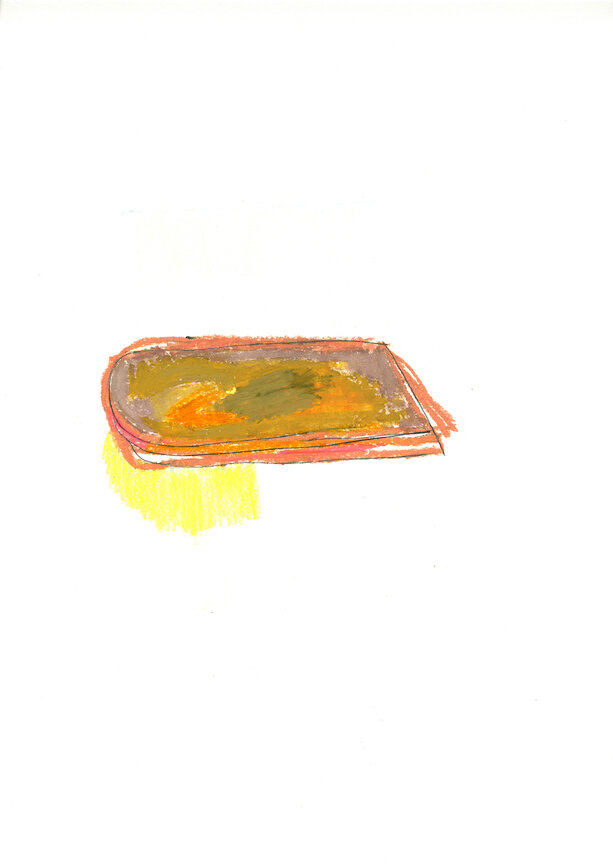
Mixed media on Stonehenge paper, 15 x 22 inches
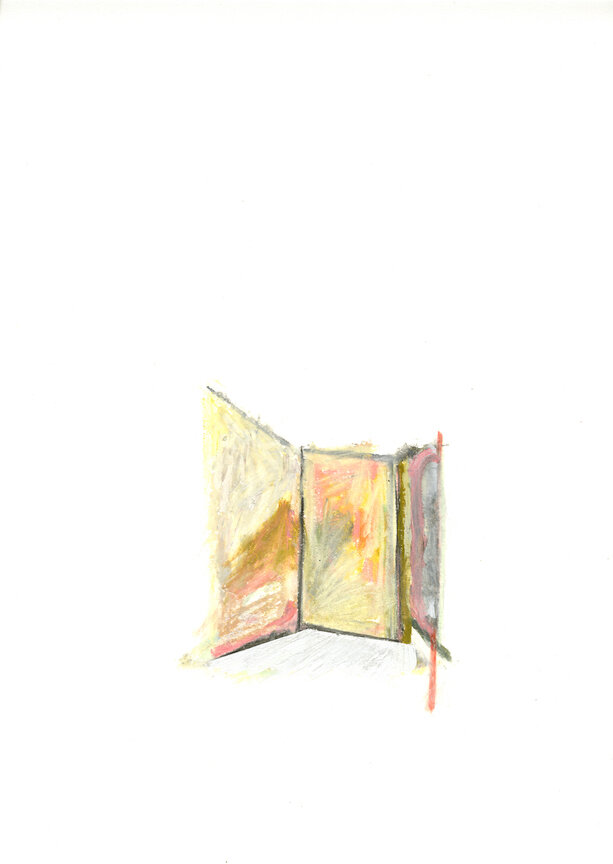
Mixed media on Stonehenge paper, 15 x 22 inches
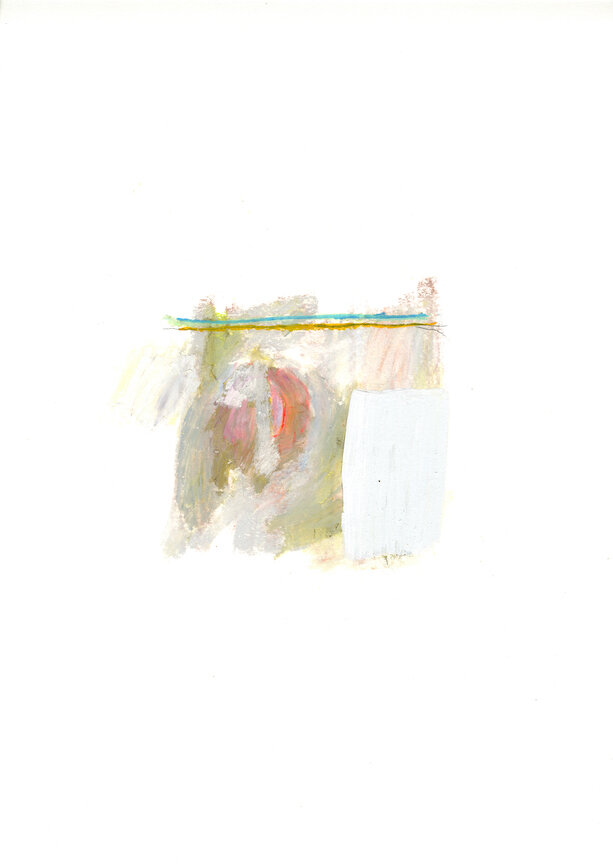
Mixed media on Stonehenge paper, 15 x 22 inches

Mixed media on Stonehenge paper, 15 x 22 inches
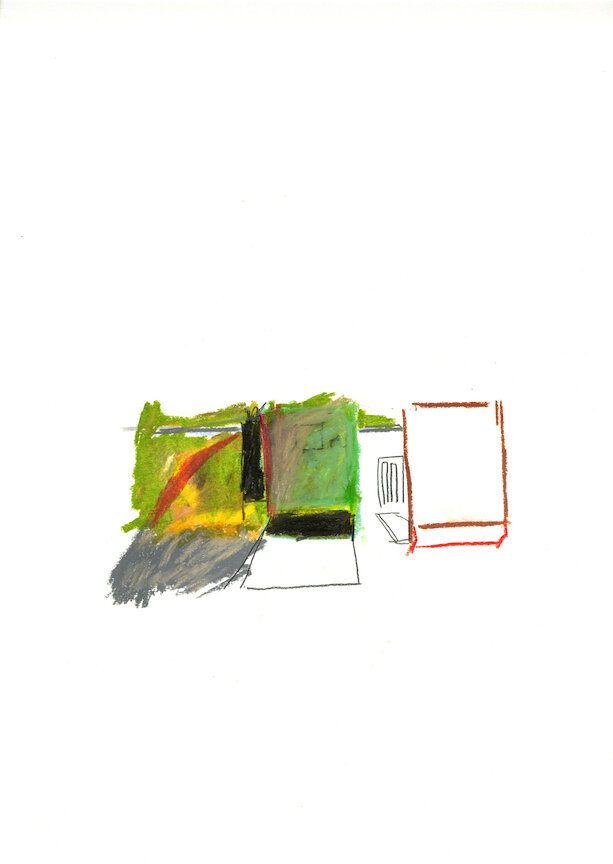
Mixed media on Stonehenge paper, 15 x 22 inches

Mixed media on Stonehenge paper, 15 x 22 inches

Mixed media on Stonehenge paper, 15 x 22 inches
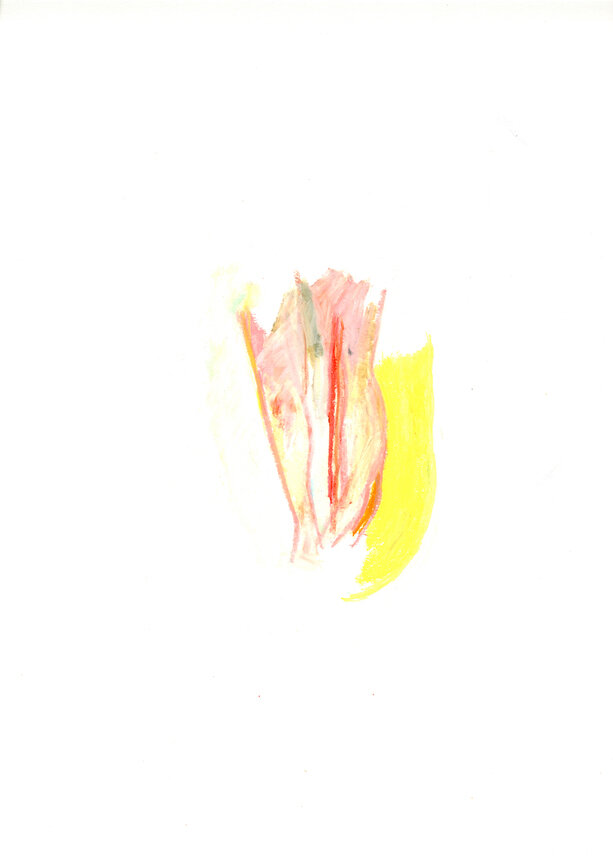
Mixed media on Stonehenge paper, 15 x 22 inches

Mixed media on Stonehenge paper, 15 x 22 inches

Mixed media on Stonehenge paper, 15 x 22 inches
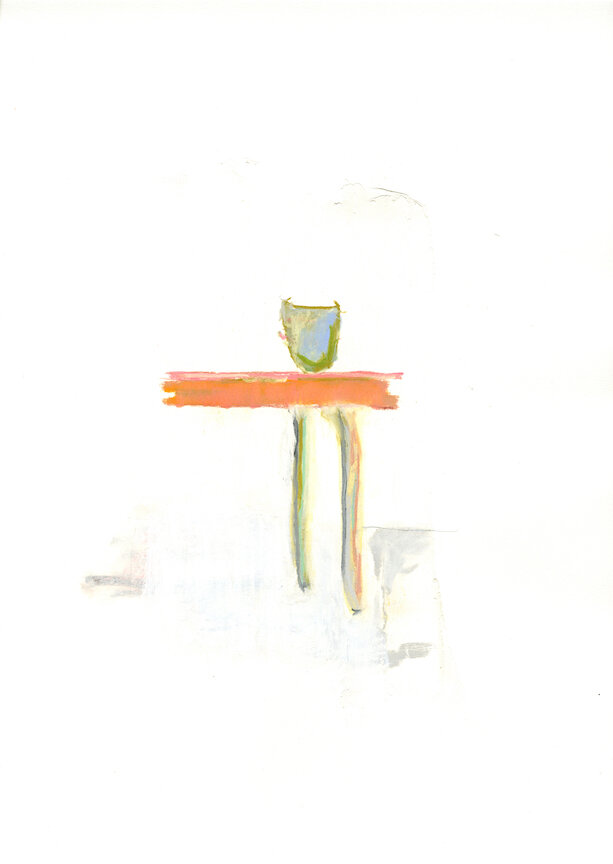
Mixed media on Stonehenge paper, 15 x 22 inches